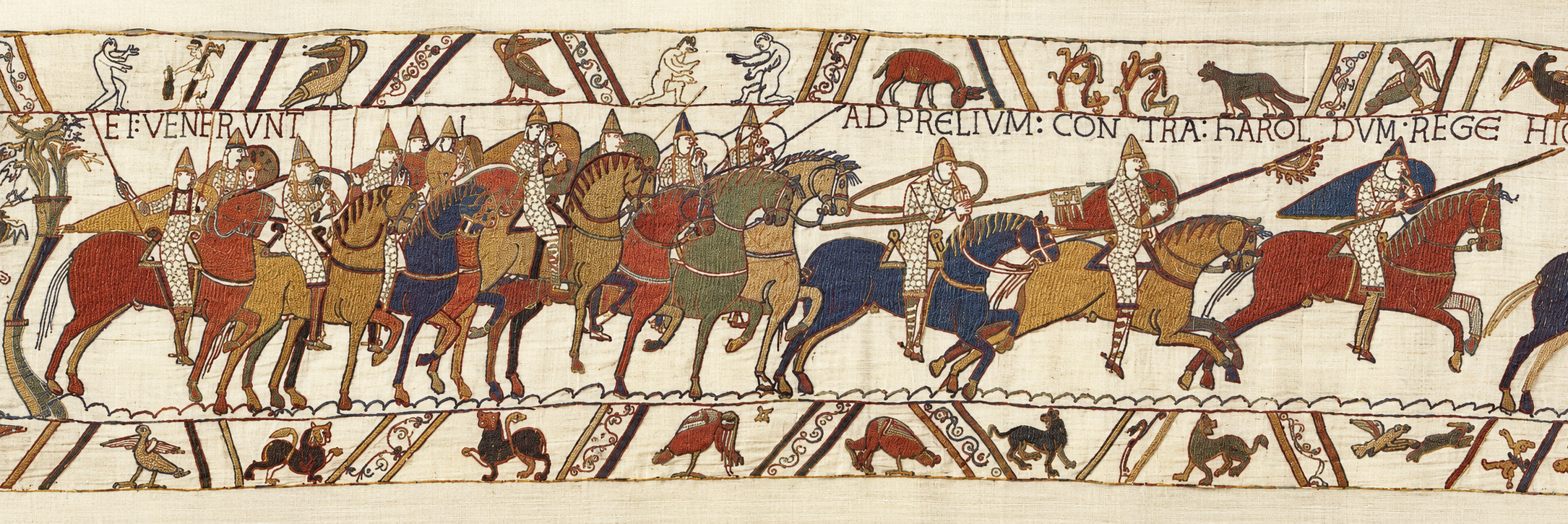
In 1986, the mayor of Bayeux, Mr Lecarpentier, commissioned a Requiem from Gérard Legoupil to commemorate the nine-hundredth anniversary of the death of William the Conqueror, Duke of Normandy and King of England.
He wanted a powerful work with martial undertones that would speak to music lovers and newcomers alike. The premiere took place on 4 December 1987, conducted by Jean-Louis Basset, before an audience of nearly two thousand.
Accessible and melodic, the work pays tribute to great Requiem composers — Gilles, Mozart, Verdi and Fauré — while retaining its own voice. The key of D minor gives it unity and a connection to Gregorian chant.
The original forces
Three soloists — haute-contre (high tenor), tenor and bass — a large mixed choir including a small women's choir, and an instrumental ensemble: flute, oboe and cor anglais, bassoon, two trumpets, horn, trombone, two double basses and three timpani.
A revised score
From 2017, the haute-contre part may be sung by a mezzo-soprano. The original twenty sections were regrouped into eighteen; some choral passages were added or revised, along with the opening of the Lux aeterna for the soloists. The definitive 2026 version adds a B-flat clarinet.