GL.GÉRARD LEGOUPIL
COMPOSER

Programme music · May–June 2017 · 12 minutes

Vents rebelles.

1793–1794: the Vendéens resist the advance of the Republican forces, known as the Blues.

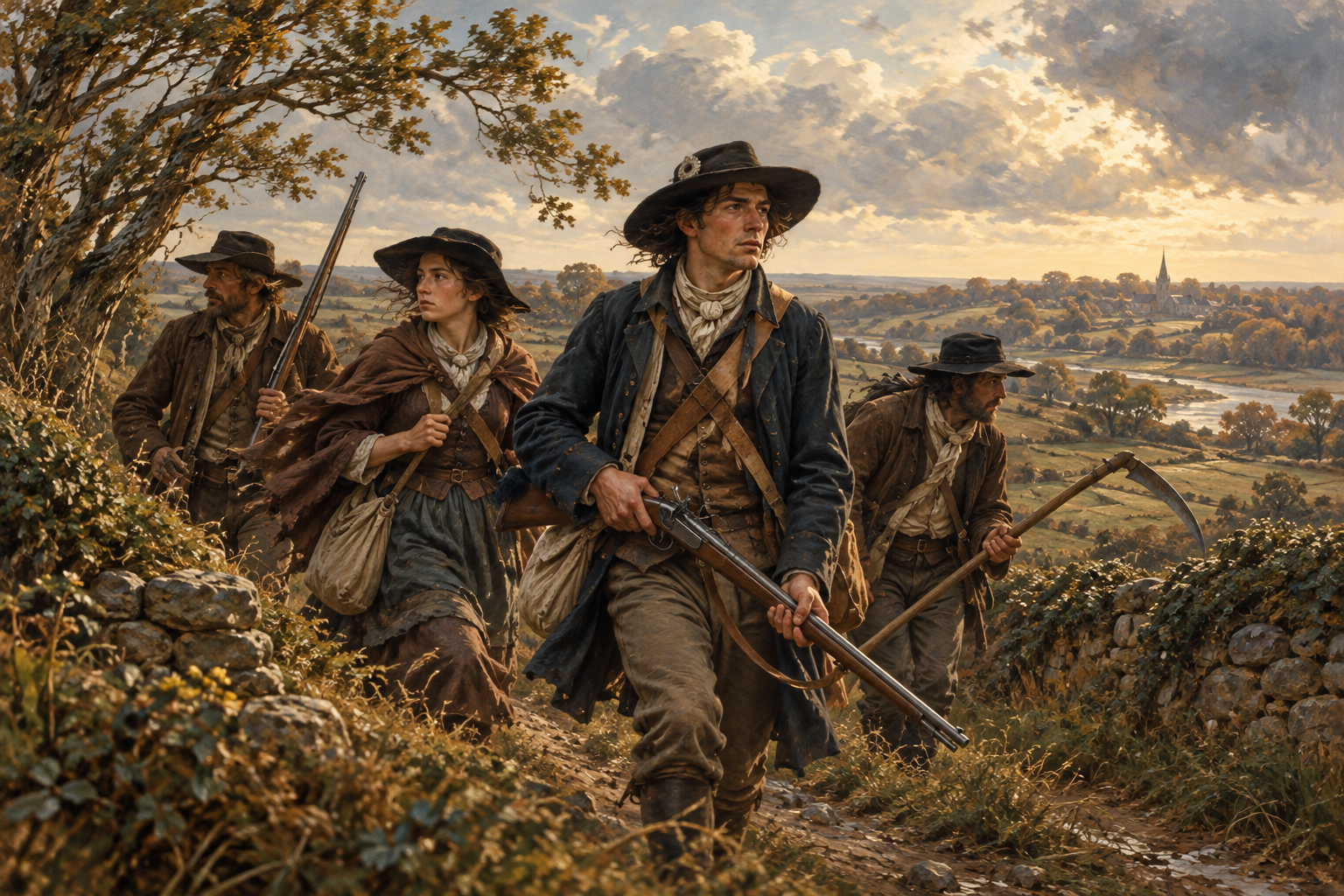
Vendéen insurgents in the bocage countryside, an illustration for Vents rebelles
An evocation of the wars in Vendée · illustration created for Vents rebelles

The composer's intention

The story of a region,
told through programme music.

After leaving Normandy and settling in the Mauges, Gérard Legoupil discovered the history of the wars in Vendée through reading, encounters and the local heritage.

The passage of the Republican forces known as the infernal columns through La Boissière-sur-Èvre in early 1794 inspired him to express this history in music. Vents rebelles offers a free interpretation of scenes from the wars in Vendée.

The instrumental ensemble comprises flute, oboe, horn, bassoon, double bass, two trumpets, trombone and percussion.

Ecouter Vents rebelles

Digital rendition · complete work

Listening guide

From the village
to the funeral march.

The scenes described here follow the musical programme devised by the composer.

01

Threat and celebration

Dark music evokes the Reign of Terror and the preparations of the Republican army. In a Vendéen village, dancing and carefree festivities are interrupted by a trumpet call. The trombone announces the approaching march of the Blues.

02

The gathering

Anxiety gives way to hope. The horn sounds the call of the Whites, followed by their march in a major key. The bassoon, then the trombone, unfold unsettling melodies: the armies are drawing closer.

03

The clashes

Calls follow one another until battle begins. An initial Vendéen victory is followed by a renewed attack. The trumpet resumes the march of the Blues, punctuated by interventions from the Whites, until the final battle and defeat.

04

The funeral march

The bassoon slowly resumes the march of the Whites in a minor key. The instruments fall silent one by one. The arrival of an infernal column interrupts the march; the bassoon and oboe then take it up again. The oboe stops, the brass take over, and the bassoon is left alone. The trombone recalls the opening of the march of the Blues: the final word.